ARMORED COMBAT
Armored Marshal in Charge
HL Vasilli
rattancombat@chilies.calontir.org
RATTAN SCENARIOS
Thursday – Authorizations, Inspections, & Pickups!
Scheduled pickups 4pm til your Mom whistles for you to come home.
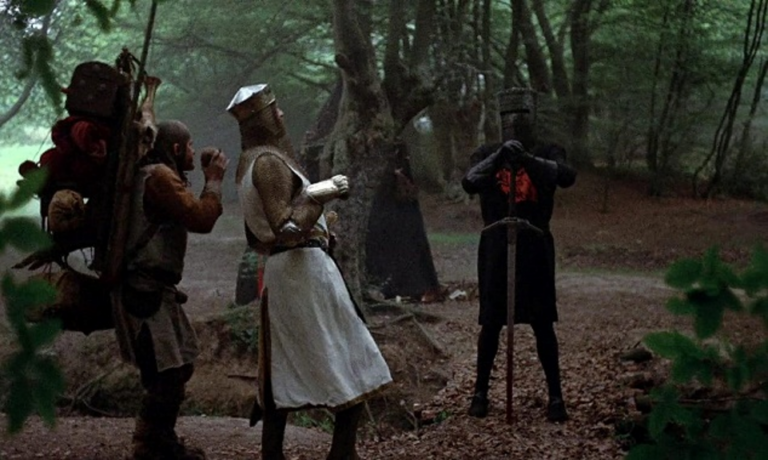
Friday Melee – “Black Knight Battle”
Everyone was too tuckered out to get this one in last year, so we are trying again!!
Format – Open Field
Time – 45 Minute Infinite Res Battle (Unless Objective is Achieved)
Teams – Marshals choose teams, attempting to keep it even based on skillset and numbers. Let us know if you are specifically trying to work as a unit and we’ll try to keep your small groups together.
Scenario – Each team designates a representative to be “The Black Knight” for their team. Each team will have infinite resurrections until their “Black Knight” has been killed 3 times. When your team’s “Black Knight” has died 3 times, your side loses their ability to res.
Win Condition – Continue to last man standing.
Weapons Restriction – No combat archery or siege.
Friday Tournament – FVCK Cancer Tourney
$1 (minimum) donation per field, per fighter
This will now be a rattan AND steel tourney, with fields running simultaneously.
We now need willing marshals for the steel fields.
Funds will be split evenly to be donated to two different organizations, or the same organization if both victors choose.
Calontir! My friends and family, we have all been deeply affected by cancer in one way or another, and it’s time we raise blades and fight back. Myself and the Order of the Roses are hosting a rattan FVCK Cancer Tourney on Friday of Chillies.
Fighters need not be sponsored to enter. We will be asking a $1 minimum donation to fight, as well as accepting donations from the populace. At the end, the funds will be counted and the victor of the tourney will get to choose any cancer-related non-profit organization (research, patient/family support, etc.) to which the funds will be donated.
We encourage banners or other memorials in honor of those whom we have lost, those currently battling, and those who have conquered.
In service to the dream,
Contessa Adalyde Heloyz la Cantora
Friday Tournament – “Torchlight Tourney”
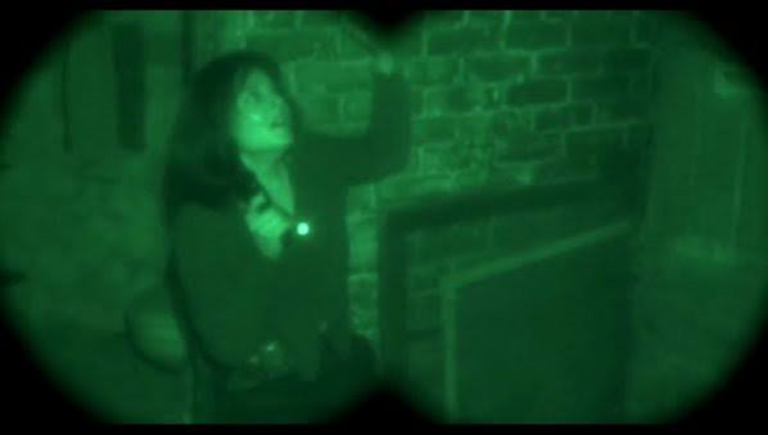
“Bring your Best” Torchlight Tourney for Peppin & Kennocht’s Vigil. Don’t worry, no one else can see, either.
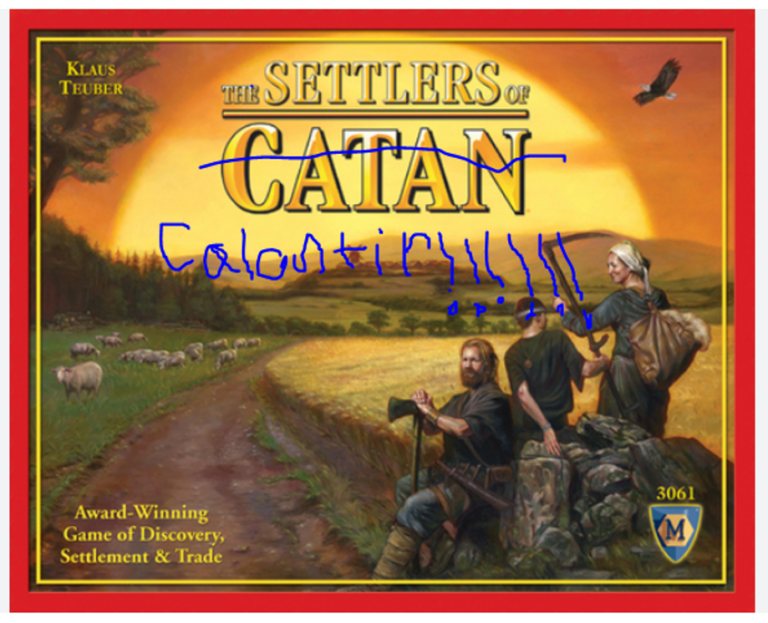
Saturday Melee – “Settlers of Calontir”
(This image was NOT produced using any AI generative tools)
Format – Side on side, open field. Each team gets 3 resurrections per fighter.
Time – 5 minutes
Teams – Marshals choose teams, attempting to keep it even based on skillset and numbers. Let us know if you are specifically trying to work as a unit and we’ll try to keep your small groups together.
Scenario – The war has spread to a wide front across the region. Some areas once peaceful, now burn as villages are sacked, strong fortresses reduced to rubble, other areas have succumbed to a free-for-all as resources become scarce while the war rages on. Brick, Wood, Wheat, Sheep, and Ore are scarce. Both armies now scour the landscape for whatever they can get their hands on. Both teams will hunt the field to gather resources to take back to their starting point. Resources MUST be placed by hand at the starting point (no throwing across the line). If you are in possession of a resource, you cannot take an offensive position. You may only block. (Hint: work together)
Win Condition – The team that collects the most resources wins that round.
Weapons Restriction – None.
**We will repeat it if folks are feeling froggy.**
Saturday Tournament – “283rd Night”
Who will it be???
Short Explanation – We are attempting to re-institute a big ‘high-falootin’ tournament that brings prestige and legacy.
Long Explanation
For many years, the Barony of Lonely Tower hosted one of Calontir’s favorite tournaments, “The 12th Night Tournament.” We all travelled North on perilous roads, in the dead of winter to try to bring back the glory and honor that goes with being the bearer of the 12th Night spear. This is the first of many “283rd Night Tournaments” and it will always be on Saturday at Chilies. The Barony of Lonely Tower has graciously allowed us to put the ORIGINAL “12th Night” spear back into rotation as our travelling trophy. Will you be the first in a long line of victors?? Bring your best weapon system, your honor, and all your stamina.
(Side note – 283rd night because October 10th is the 283rd day of the year… and I am not clever… I am challenging (BEGGING) heralds to come up with a better name!! If you do, I will make you a custom prize. ~Emma)
Format – Bearpit
Time – 45 minutes
Teams – None
Scenario – Form a Single line in the shade at the tree line. We’ll have four fields running at once. The lead marshal will direct you to the open field. Winner of each bout wins the field, but wounds will be retained. 45 minutes to claim as many wins as you are able. We’ll take a 15 minute break, and then fight out the top four finalists.
Win condition – Most collective wins to make it to the top 4. Final 4 matchups will be drawn at random. Those matches will fight best 2 out of 3. Winners will move to the next round. The winner will be declared, announced in court, and will get the travelling trophy. You will be expected to attend next year so that you can pass the spear to the next bearer.
Weapons Restrictions – None
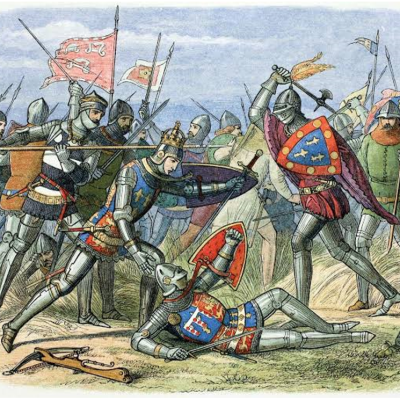
Saturday Melee – “14th Century Deed”
See separate rules below.
Sunday Field
**The field will be open for pickups and teaching during the Pax Romana**
Sunday Melee – “Pax Romano” – See separate rules below.
Sunday Tournament – “Man at Arms Tournament” – Come get some loot!!!

This tournament is for anyone that has NOT received an Award of Arms for fighting, anywhere in the Known World.
This tournament is sponsored by Mistress Anna and Syr Konyl.
They will determine the format after they know how many folks have signed up.
Bring your best weapon system.
We promise it will be worth putting your armor on. Every single participant will walk away with a prize.
Every single person will get the opportunity to choose something out of the loot chest.
This will be after the Rattan Pax ends, estimating around 12:30, please be patient as they are walking all over site for that scenario.
——————————————————————————————————————–
14th Century Deed Deep Explanation –
All combatants must be armed and dressed in a manner appropriate to a professional soldier, vassal, or lord of the 14th century. Every combatant is expected to have a ransom suitable to their station in the event they are captured.
The simplest rules to remember for all combat are:
14th-Century Armor as Worn
- 14th-century armor is impervious. Blows and thrusts to armor do nothing.
- Blows and thrusts to any unarmored area kill.
- Three blows to the helmet with a two-handed weapon, delivered within a reasonable interval, cause the wearer to be stunned.
- Stunned combatants may be captured by laying a weapon or hand on them and calling for their surrender.
Armor
Armor is defined as maille, metal, or leather (hardened or splinted). Modern materials may be used in construction, but the finished piece must look like period armor — for example, plastic covered in leather to resemble a brigandine, leather cuisses, or vambraces are acceptable. Painted plastic or visible modern sports gear is not acceptable. Only armor with a 14th-century appearance is allowed for the deed and will count as “armor as worn.” Mitten gauntlets are permitted.
- Visors are strongly encouraged.
- Bar grills do not count as armor. Blows to a bar grill are kills.
- Greaves are required.
- Shields are prohibited.
Weapons
Weapons may be of any design that are legal and existed in the 14th century.
- Swords are limited to five feet.
- All other weapons are limited to six feet.
- No basket hilts.
Capture
- Three blows to the helmet with a two-handed weapon, delivered within a reasonable interval, cause the wearer to be stunned.
- Any stunned or disarmed combatant may be captured if an opponent lays a hand or weapon on them and calls for their surrender (yield).
- A captured combatant is bound by honor to accompany their captor to a ransom point. Once successfully brought there, the prisoner sits out the rest of the fight (except as noted below). Successful capture creates a ransom debt, described below.
- A captor is not required to physically hold onto the prisoner; the prisoner must simply follow at a reasonable pace to the designated ransom point.
- If the captor is attacked while escorting the prisoner, the prisoner must stand aside and wait until that fight ends.
- If the captor is captured or killed before reaching the ransom point, the prisoner is freed and may rejoin the fight.
- If the captor moves more than roughly 30 feet away from the prisoner during the fighting, the prisoner may also rejoin the fight, at their own discretion.
- If a prisoner reaches the ransom point and their captor is then killed (not captured), the prisoner is freed and may rejoin the fight.
- Only those captured alive may be ransomed.
- A captor may release their prisoner at any time.
Ransom
- A captured combatant must offer their captor a ransom befitting their station in the SCA (for example, a duke is expected to offer a greater ransom than a lord). There is no fixed price or requirement — the ransom simply must fit the captive’s station, reflecting both that their life was spared in recognition of the ransom’s value and that the captor risked much to take them. Ransoms should honor the risk taken by the captor and the mercy of having one’s life spared.
- All ransoms are negotiated and promised directly to the captor at the end of the engagement.
- The ransom does not need to be physically in the captor’s possession (and should not be carried into battle) — a promise is acceptable if the captor agrees to it.
- Captors have final say on what ransoms are acceptable.
- If a captor considers the ransom offered insufficient, the captive and captor should work together to agree on a satisfactory one.
——————————————————————————————————————–
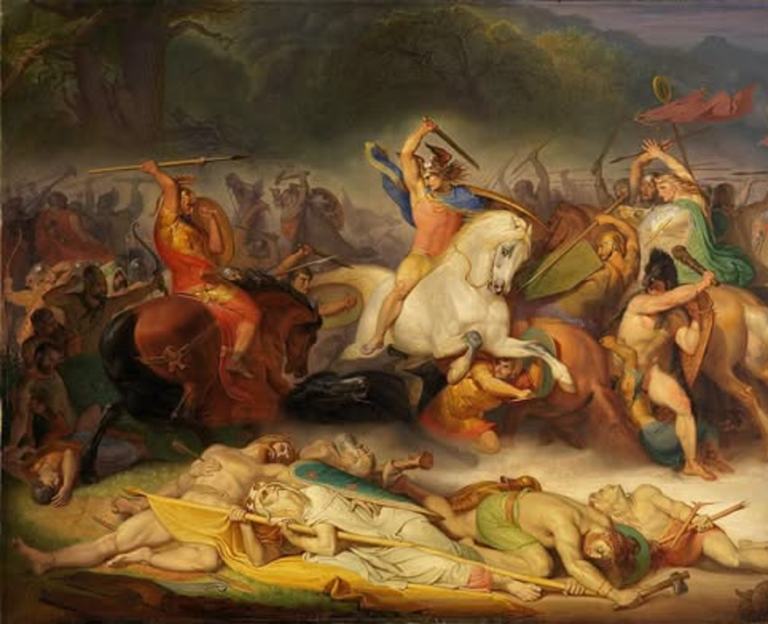
PAX ROMANA (Romans vs. Germanic Tribes)
SCENARIO
Based on the raids between the Germanic tribes under Arminius and the Romans under General Publius Quinctilius Varus around AD 9 in Northeast Roman Gaul.
CONDUCT
All participants are fully expected to follow both the intent as well as the letter of the rules. Rules-lawyering and failure to behave in the spirit of this Pax will lead to immediate expulsion from the Pax. All gear and behavior for this Pax should be chronologically appropriate for the Roman Legions or their Auxilia, or the Germanic tribes, being portrayed from roughly the 1st-2nd centuries AD. Failure to bring appropriate gear or to act appropriately for this era is sufficient cause for exclusion from the Pax.
The burden to follow the rules on and off the field and to behave appropriately for the era is on each individual participant. Each participant is responsible for their own honor, acknowledgement, and safety, though nobody may intentionally seek to actually harm another participant.
KIT INSPECTIONS
Kits will be inspected for authenticity on a limited basis. A photo of the kit should be shared well before the Pax for feedback. If the marshal in charge, or either Team Captain feels a kit is not up to specifications the day of, he will consult with the other three and a decision will be made. Kits not meeting standard will not be allowed on the field.
PRAEDA
As this event is in the spirit of sharing High Persona knowledge and techniques, at the Armilustrium that will follow the battles there will be an exchanging of praeda (plundered loot and war spoils). These items can be historically accurate items that are to be given to another soldier, as a representation of them besting you in some way. The goal will be that each person leaves with something to better their kit for the next iteration of the Pax. We will ask that those that have a deep knowledge base of the Roman or Germanic personas be responsible for having praeda to give out to newer members to the persona.
ARMORED COMBAT CONVENTIONS
General:
- All combatants are considered engaged at all times.
- Bodily contact and “body checks” are legal but should be of a controlled nature.
- Opponents knocked to the ground can be called ‘dead on the ground’.
- Becoming unarmed does not render you helpless and no hold will be called. If you do not have a secondary, you may recover a weapon from the field, yield or run.
- Strikes to the leg will render the fighter incapacitated.
- Thrusts to the leg will allow the fighter to fight from a kneeling position.
- Shields should be of a common type used in 1st century Germania. Ovals, Scutums, Rounds, Elongated hexagons. Shields may be used passively if slung across the back in a period manner.
- STRIKING WITH SHIELDS, HAFTS, OR WEAPON GUARDS IS NOT ALLOWED.
- INTENTIONALLY TRIPPING OPPONENTS IS NOT ALLOWED.
Armoured Areas:
- Warriors may accept 2 strikes to the top of the helm before death.
- The top of the helm is considered proof against thrust.
- Warriors may accept 2 strikes to areas covered by chain maille before death.
- Chain maille is considered proof against thrust from single-handed weapons.
- Lorica Segmentata is considered proof against thrust from Spears and single handed thrusts.
- Chain maille is NOT considered proof against thrust from spears.
Thrust and Throw Spears
- Thrown T&T spears only require one strike to kill through helms.
- Using a Germanic held shield to block three thrown spears will destroy the shield, and the opponent must drop the shield. This applies to passively slung shields as well.
This does not apply to Roman held shields, because Germans don’t toss Pila.
KIT REQUIREMENTS
Basic Appearance:
- Fabrics should be of wool or linen, or suitable look-alikes. Blatantly modern fabrics will not be allowed, but cotton is acceptable for patterned fabric due to limited options.
- Colors must be appropriate for un-dyed wool or material dyed with natural dyes.
- Costumes must contain no visible modern features such as zippers or other modern fasteners.
- NO VISIBLE PLASTICS or other modern materials.
Clothing:
- The candidates should choose clothing appropriate to the Romans or the Germanic tribesmen, being portrayed from roughly the 1st-2nd centuries AD. More detailed guides with images will be posted.
- The candidate should have a reasonable attempt at Roman tunicae or Germanic clothing, worn with a belt, balteus, cingulum or girdle, and Romans in Segmentata or Hamata should have an appropriate Focale/neck scarf.
- Trousers should be worn by the Germans and must cover all necessary safety gear. Romans can go bare legged with Greaves or may wear trousers over the armor.
- Footwear should be of low ankle boot or shoe style and either of a turnshoe construction or a suitable turnshoe look-a-like. If extra thick soles and / or studs are evident, candidates must demonstrate that they understand the construction of an early medieval turn shoe and that studs are only allowable for safety purposes. Calcae and or Caligae with Hobnails are allowed but are cautioned to avoid stepping on other participants.
Weapons:
- ALL WEAPONS MUST MEET SCA SAFETY REQUIREMENTS.
- No basket hilts PLASTIC or metal. Swords and seaxes should have period appropriate cross hilts, be single handed, and not exceed 40 inches.
- All weapons should be covered in non-obtrusive colored tape. Acceptable colors are black, greys, silver, natural wood textured duct tape, and browns. If your kingdom requires red thrusting tips, then red is acceptable. Single handed axe should not exceed 3 feet.
- Spears should not exceed 7.5 feet, and should be clearly recognizable as a Roman era spear.
- Spears SHOULD be carried by all Germanic warriors. All warriors should carry at least one other weapon, axe, early seax, or Pugio would be most common. Romans will all have swords.
- Warriors of Germanic Tribes carrying a sword should have a kit on a higher standard, including mail shirt and appropriate accessories.
Armour:
- ALL ARMOUR MUST MEET SCA SAFETY REQUIREMENTS.
- Helms should be of a distinctly 1st century style consisting of: Spangen, Conical style construction. Helms should not be visible spun tops. Helms should have the neck and sides covered in a chain or leather drape or a hood, unless supported by a period find. (Concessions will be made for helmets. Germanic tribesman encouraged to wear ‘stolen’ Roman helmets.)
- SCA legal limb and body armor must be worn hidden. The only exception to this will be gauntlets, greaves, Roman elbow and vambraces, Segmentata and chainmail.
- Again, gauntlets must be worn. It would be preferable that they not be glaringly modern, but any form of gauntlets will be acceptable as suitable finger and wrist protection in the interest of safety.
As many folks have lamellar armor this will be allowed for Romans as well as Germanics, with the following rules: Romans will treat lamellar as chainmail. Germanics must cover the lamellar with a tunic or a sleeveless over tunic.
- Gorgets are to be worn but hidden as much as possible. Romans encouraged to hide with focale.
- Exposed bar grills are allowed due to SCA allowable safety constraints.
- ALL ARMOUR MUST MEET SCA SAFETY REQUIREMENTS.
To verify the above are met you are encouraged to submit a photo of your kit and a description of your
Loot to the Captains and the MIC for their approval prior to the event.
Shield:
- Germanic – A round, hexagonal, or oval shield with a domed boss with single handgrip and no arm straps. It should have NO carpet or foam rubber padding or obviously modern components. Shields should be rimmed in rawhide or leather.
- Roman – A round, oval, scutum, hexagonal, rectangular, or other 1st century shield with a domed boss with single handgrip and no arm straps. It should have NO carpet or foam rubber padding or obviously modern components. Shields rimmed in rawhide or leather are preferred.
Additional Kit Suggestions for Germanics:
- Jewelry (decorative or functional) of a typically Germanic/Gaulish/Celtic style e.g. torcs, arm rings, pennanular brooch or circular brooch for cloak.
- A simple cloak of rectangular shape in check or stripe.
- Woad paint exposed skin.
Additional Kit Suggestions for Romans:
Hidden Knees or Greaves
Low profile elbows, or something not inherently late period design
Focale to cover Gorgets
A Paenula, or sagum.
A furca loaded with a mantica, commachio, patera, and waterbag. These will be piled off the field.